
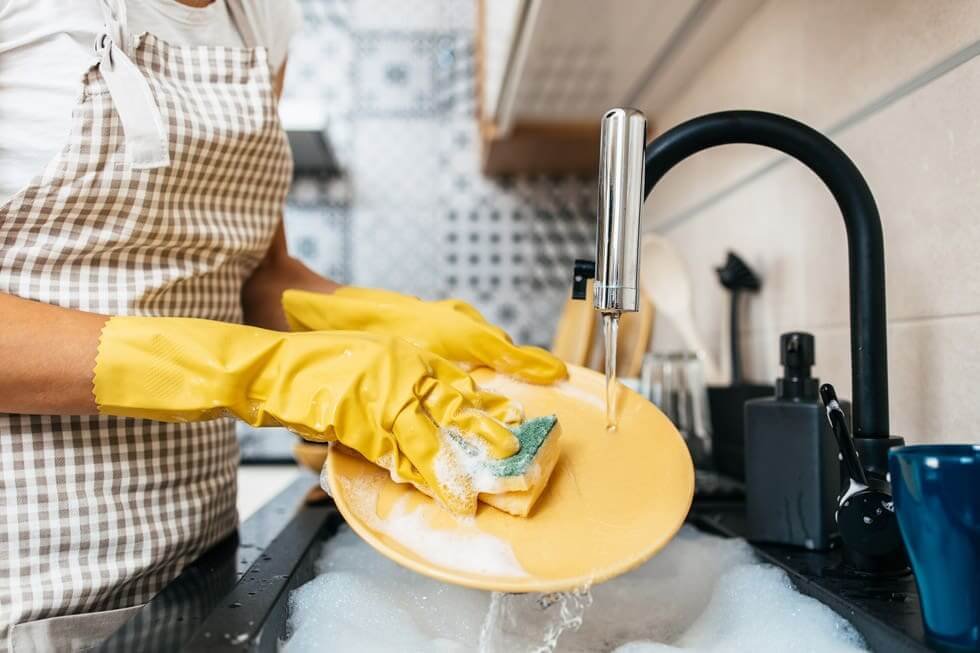
Dishwashing Industry In Indonesia
TRENDS
|
Multi-purpose cream detergents, classified by Euromonitor International as hand wash detergents in laundry care, is widely used as a hand dishwashing detergent in Indonesia, especially by middle- and lower-income consumers. 2009 witnessed the leading brand, Unilever Indonesia Tbk PT’s Sunlight, increase in price at the turn of the year, with volatile prices leading some lower-income consumers to trade down to smaller packs of liquid dishwashing and cheaper cream detergent. However, a return to lower prices by mid-2009, supported by aggressive distribution of its smaller packs, saw Sunlight close the year stronger in value terms. |
|
In contrast to other products in home care, hand dishwashing experienced an accelerating current value growth rate of 16% in 2009, a one percentage point increase compared to the previous year. This is attributed to consumers switching from larger packs to smaller formats of hand dishwashing due to lower levels of disposable income and the increasing price of the leading brand Sunlight, which accounted for 53% of retail value sales in 2009. Hand dishwashing registered strong double-digit retail volume growth of 12% in 2009, a one percentage point decline in the growth rate compared to 2008. Despite some consumers trading down to cream detergent, others are trading down to smaller packs of the same brand and other cheaper brands of hand dishwashing instead, serving to sustain the strong volume growth of hand dishwashing in 2009. |
|
Hand dishwashing remained the only significant category in 2009. Cheap labour and a high unemployment rate make maid/servant services widely prevalent among middle- and upper-income consumers, providing a barrier to the penetration of automatic dishwashers, which remained negligible in 2009 even in urban areas. In contrast with laundry care, dishwashing is viewed as minor task requiring very little time, therefore consumers who do not use maid/servant services still preferred to wash their own dishes. Most consumers are unfamiliar with dishwashers, with minimal availability in electronic appliance stores. |
|
Hand dishwashing is increasingly available in many different fragrances, however only lemon and lime are highly popular among housewives. Lemon and lime variants are perceived as having better efficacy and housewives are familiar with their scent due to their popular use as fragrance enhancers in traditional food. Although lemon fruit is not widely available in tropical Indonesia, the target audience perceives it to be another variation of the widely popular orange fruit. |
|
Hand dishwashing is increasingly available in smaller packaging formats which are popular due to their low purchase price. Lower- and middle-income consumers prefer lower purchase prices and do not consider the savings achieved over the long run by purchasing larger pack sizes. Smaller packaging is also necessary for manufacturers to be able to compete with cheaper cream detergent. Cream detergent is perceived as cheaper but having lower efficacy; however its performance is acceptable among consumers who are used to the product. |
|
The aggressive expansion of modern retailer formats sustained volume sales of dishwashing in 2009. Supermarkets/hypermarkets and convenience stores are expanding to urban cities in Sumatra and Sulawesi, reaching areas previously served by traditional retailers. Mini-market sized modern retailers in particular are funded by the franchise system, hence their expansion was not affected by the global credit crunch. |
COMPETITIVE LANDSCAPE
|
Unilever Indonesia PT continued to lead hand dishwashing with a 53% retail value share in 2009, achieved through its Sunlight brand. Unilever employed both above- and below-the-line marketing activities to push consumers to switch to liquid dishwashing from cream detergents. The most notable below-the-line activity is the ‘Agen 1,000 Sunlight’ women’s empowerment programme that encourages housewives to spread the word regarding Sunlight hand dishwashing and gain income instead of depending on their husbands. Unilever Indonesia PT hands out prizes for the housewives who are able to convert the highest number of friends to Sunlight hand dishwashing, which is very attractive to housewives especially from middle- and lower-income families who are challenged to meet increasingly high prices of basic commodities. |
|
Lion Wings PT remained in second place in hand dishwashing with a 30% retail value share in 2009 through its Mama brand, better known as Mama Lemon, Mama Lime and Mama Apple. Mama was launched in new packaging early in 2009 to highlight its new formula and perfume, supported by an aggressive above-the-line campaign to highlight its efficacy against tough stains and oil. Mama and Sunlight are fighting for a share of dishwashing in traditional retailers in smaller packaging formats. Mama hand dishwashing is positioned at a slightly lower point than Sunlight in terms of price, in line with Wings Corp’s follower strategy and history of offering slightly more competitive prices than Unilever Indonesia PT. Lion Wings PT also offers premium priced Mama OXY to complete its hand dishwashing portfolio. |
|
In contrast to Sunlight, which is promoted in its lime variant with predominantly green packaging, Mama is mostly promoted in its lemon variant with predominantly yellow coloured packaging. Thus consumers usually associate lemon with Mama and lime with Sunlight, even though both Mama and Sunlight are available in lemon and lime variants. The third variant of Mama is apple, while Sunlight launched a strawberry variant in 2009. |
|
Manufacturers are increasingly offering hand dishwashing in smaller pack sizes. Previously the smallest packaging size was 400 ml, but 180 ml and 90 ml packaging became the most popular ammunition to gain share from cream detergent due to its ability to pass the psychological price barrier and to stand on level ground with cream detergents in terms of price. Advertising campaigns by leading manufacturers highlighting that only one drop of hand dishwashing is enough to wash a day’s worth of dishes suggest that hand dishwashing is cheap in the long run, garnering interest from previous users of cream detergents. |
|
Refill pouch packaging is most popular in 2009 and slowly replacing bottle packaging on retailers’ shelves. Bottle packaging is only popular as a starter kit for middle- and upper-income families, who have long since adopted hand dishwashing. Despite bottle packaging being more convenient to use and more spill-proof, middle- and lower-income consumers who were previously non-users lack interest in bottle packaging and prefer to buy in smaller pouch packaging due to their unwillingness to pay more. Such consumers often substitute with widely available empty mineral water bottles. Non-leading brands of liquid dishwashing are often only offered in refill pouch packaging, with the assumption being that buyers already own bottle packaging of a leading brand at home. Even in supermarkets/hypermarkets, bottle packaging only commanded meagre shelf space in 2009. Joenoes Ikamulya PT offers Yuri Ligent in bottle packaging with a hand pump similar to popular bottles of liquid soap for hand wash products. |
|
Most players in home care offer a product line in hand dishwashing, taking advantage of aggressive consumer education regarding the benefits of using hand dishwashing over cream detergents. Consumers are spoilt for choice in terms of hand dishwashing brands. Some of the popular brands of non-leading hand dishwashing include Yuri Ligent, Morning Fresh, SOS, Emori, Sleek, Pizzi, Kleenly and private label. Most of the non-leading brands are offered at a slightly lower price than the leading brands Sunlight and Mama, presenting affordable alternatives to less loyal consumers, apart from Yuri Ligent which is positioned a little higher to command a high quality brand image. Distribution of these non-leading brands of hand dishwashing has yet to reach similar levels to those achieved by Unilever Indonesia PT and Lion Wings PT. Most of the non-leading hand dishwashing is offered in lime and lemon variants, following the example set by the leading brands Sunlight and Mama. |
|
Popular promotions in hand dishwashing include a free plate/bowl gift, free dishwashing sponge, price discounts, an extra 20% or 30% for the same price and product bundling with a free smaller pack of another product within home care. Such promotions are very attractive to housewives, the main target audience of hand dishwashing, who are always looking for value-for-money offers and often swayed in their choice of brand by promotions. Extra 20% or 30% contents for the same price, however, offers a dilemma to the consumer as the standard bottle cannot accommodate the extra contents. |
|
Sunlight Active Gel, launched late in 2009, is a very innovative product from Unilever Indonesia Tbk PT. An above-the-line television campaign was launched to educate consumers that a thick concentrated formula enables just one drop of gel to wash a day’s worth of dishes. The semi-solid format allows the gel to be visible and stick to a dishwashing sponge for the whole washing process, in contrast to regular dishwashing liquid that is mixed with water and becomes diluted. Sunlight Active Gel is sold in tiny starter bottles of only 250 ml, in contrast to much larger 800 ml bottles of regular hand dishwashing. Its tiny size offers a novel design factor that causes it to stand out from other hand dishwashing. Refill packaging of Sunlight Active Gel is also available. Sunlight Active Gel is offered in lime and orange variants to further differentiate from lemon, which is strongly associated with Mama. |
PROSPECTS
|
Hand dishwashing is expected to register strong double-digit annual value and volume growth rates over the forecast period. Higher levels of disposable income and a positive outlook following the easing of the effects of the global economic crisis are expected to sustain volume growth. The dishwashing category is expected to register an 11% constant value CAGR and a 10% retail volume CAGR over the forecast period. Despite expectations of strong growth, decelerating growth rates are expected due to the achievement of widespread distribution and the approach to maturity by the category. |
|
Average unit prices are expected to see modest growth over the forecast period due to a return to higher disposable incomes. Smaller packs of hand dishwashing were more popular early in 2009 due to the tough economic climate, yet demand for larger pack sizes recovered in mid-2009. The switch to larger packaging, especially by middle-income consumers purchasing from modern retailers, is expected to continue over the forecast period. A strong competitive environment that regularly employs price discounts will also ensure limited movement of average unit price. |
|
Better economic conditions and a strongly competitive environment will drive manufacturers to innovate and introduce value-added products. Other manufacturers are expected to follow Unilever Indonesia Tbk PT and offer value-added products over the forecast period. With low overall environmental consciousness product innovation is expected to highlight efficacy instead of a natural environmentally friendly concept. |
|
For leading brands of hand dishwashing Sunlight and Mama, distribution of hand dishwashing is expected to be split between modern and traditional retailers. However for other non-leading brands of hand dishwashing, distribution is expected to be dominated by modern retailer formats over the forecast period. Rapid expansion of modern retailer outlets, expected over the forecast period, is likely to sustain the competitive environment of hand dishwashing by offering non-leading brands of hand dishwashing to a wider section of the population. |
|
Penetration of automatic dishwashers is expected to remain negligible over the forecast period. Low product awareness and low availability is expected to limit the numbers of automatic dishwashers sold to only a small number of expatriates in urban cities. The low 18% penetration of laundry washing machines in urban areas and negligible penetration in rural areas dictates that automatic dishwashers are not expected to catch up due to dishwashing being considered a lighter household chore than laundry washing. Cheap labour costs and a high unemployment rate are expected to remain as barriers for both automatic dishwasher and washing machine penetration, as middle- and upper-income families continue to delegate household chores to maid/servant services. |
Source: Euromonitor International