
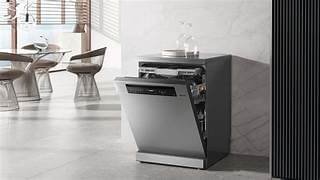
Dishwashers Industry In Brazil
{{ $trans('storefront::product.left_in_stock', { count: item.qty }) }}
In stock
Out of stock
HEADLINES
• In 2010 retail sales increase by 8% in volume terms and 6% in current value terms
• The end of the IPI tax incentive helps dishwashers to record a stronger sales performance in 2010
• Built-in dishwashers registers the highest retail volume growth of 36% in 2010
• The average unit price decreases slightly in 2010 driven by discounts by retailers and manufacturers in order to increase household penetration
• With easy access to hired help, dishwasher sales are limited in Brazil
• Whirpool holds a 52% share of retail volume sales in 2010
• Dishwashers is expected to grow by a 6% retail volume CAGR over the forecast period
₹0.00
TRENDS
- This category was not included in the IPI tax reduction measures implemented by the Brazilian government, which ended on 31 January 2010. The IPI tax reduction in other major appliances categories in 2009 saw consumers focus their purchases on refrigeration and home laundry appliances, which are perceived as more essential items than dishwashers. However, retailers and manufacturers slightly reduced unit prices to stimulate sales as dishwashers suffers from low household penetration. This is due to the availability of mainly large-sized and high-priced products targeted at high-income consumers.
- Dishwashers remained a very small category in Brazil, mostly because of cultural reasons. These products carry high unit prices and are targeted mainly at higher-income households. However, affluent households very often employ a maid to take care of the house and therefore wash-up. This cultural factor has slowed down the development of dishwashers and manufacturers are trying to convince customers with ecological features and low energy consumption products to try to invert the trend.
- Built-in dishwashers accounted for only a 1% share of retail volume sales, but it recorded the fastest retail volume growth of 36% in 2010. The main reason is that dishwashers are purchased mainly by high-income consumers who prioritise design and lead more European/American lifestyles. As a result, it is very common for them to purchase a whole range of kitchen appliances, aiming to at a more integrated design and decor, in particular built-in appliances.
- In order to increase the popularity of dishwashers, manufacturers and retailers have been focusing on product visibility and promotions that lower unit prices. There have been efforts made by Whirpool, in partnership with Reckitt Benckiser (Brasil) Ltda, to elevate sales of dishwashers under the Brastemp brand and automatic dishwashing detergents under the Finish brand towards the end of the review period. The strategy was very positive for both brands, but sales remain concentrated among more affluent consumers.
- The dishwasher category is divided into full size, products with a larger capacity, accounting for a 68% share of retail volume sales in 2010, and compact dishwashers, which held a 32% share. Full size dishwashers are usually bought by large families and 6-9 place settings are the most common size sold. Compact dishwashers are usually available as freestanding products to be placed on the top of a table or similar furniture in the kitchen. There are few compact models available in the market and this kind of product would be best suited to the needs of single-person households or couples, which often have a limited space in the home.
- Hypermarkets, department stores and electrical goods retailers (multiples and independents) are the most important distribution channels for dishwashers, accounting for a combined 81% share of retail volume sales in 2010. Electrical goods retailer multiples recorded the biggest increase in retail volume share in 2010 due to its wide range of models and payment facilities, which enable consumers to pay in instalment plans of up to 12 months.
COMPETITIVE LANDSCAPE
- With a low penetration rate due to cultural reasons, international manufacturers lead dishwashers in Brazil. Whirlpool (Brastemp and Consul) dominated the category with a 52% share of retail volume sales in 2010. Brastemp has high-end positioning with products priced from R$1,600-R$4,800, while Consul has mid-end positioning with products available at R$1,300. In 2010, Brastemp continued to record a slight increase in retail volume share due to investments, in partnership with Reckitt Benckiser, to promote its dishwasher with Finish automatic dishwashing detergent, and the good image of the brand among consumers.
- Electrolux also recorded a slight increase in retail volume share to reach 16% in 2010. This performance was due to investment in a new product, Minha Escolha (My Choice), which allows consumers to decorate the dishwasher with decorative stickers. It is a product targeted at smaller families as it is designed for five place settings. The new product is intended to attract couples in Brazil, a household type that has been growing fast at the end of the review period.
- In order to attract new customers, mostly affluent ones, dishwasher manufacturers have been investing in stainless steel products, and personalised decoration items and eco-friendly features such as low water consumption. In addition, manufacturers have invested in promotional activities at the point of sale to attract the attention of middle-class consumers, which are perceived to offer high growth potential as their disposable income levels increased significantly in the review period.
- In order to strengthen its position in dishwashers, Electrolux launched a marketing campaign to support its new personalised product range, Minha Escolha. Meanwhile, Mabe Eletrodomésticos has invested in a dishwasher under the Mabe brand, developed to cater to the needs of local consumers. The new product is being advertised on television, including merchandising activity on TV programmes targeted mainly at women, and via the internet. This campaign, which was launched in 2008, and continued to run in 2010, focuses on explaining the benefits and specificities of certain items and trading on the Mabe name as one of the best-known consumer appliance brands.
- New product developments are mainly focused on energy efficiency and low water consumption. Manufacturers are trying to convince Brazilian consumers that hand dishwashing is a high water consumption activity that could be widely reduced by using a dishwasher.
PROSPECTS
- Dishwashers is expected to grow by a 6% retail volume CAGR and a 7% constant value CAGR over the forecast period. Good sales performances in dishwashers are expected because the category is still small with a very low penetration rate due to cultural reasons. Additionally, increasing disposable income among middle-class consumers is likely to spur sales of dishwashers.
- Dishwashers is set to experience a sustainable growth as Brazilian households become more familiar with the product type and its functionality, while manufacturers and retailers increase product visibility and availability by extending their distribution reach. In addition, brands should propose more affordable products targeted at the middle class, which would grow the consumer base in the forecast period.
- Built-in dishwashers is predicted to remain the fastest growing category, with retail volume sales projected to grow by a 23% CAGR over the forecast period. The growing preference for built-in dishwashers is driven by perception that built-in products occupy less space than table-top alternatives and offer a more attractive look to the kitchen.
- While dishwashers is totally dominated by multinational companies, local manufacturers, mainly present in other major appliance categories, such as Esmaltec, Irmãos Fischer S/A Ind e Com or Suggar Electrodomésticos might invest in the category as retail volume sales increase and the interest in convenience products in the kitchen grows.
Source: Euromonitor International